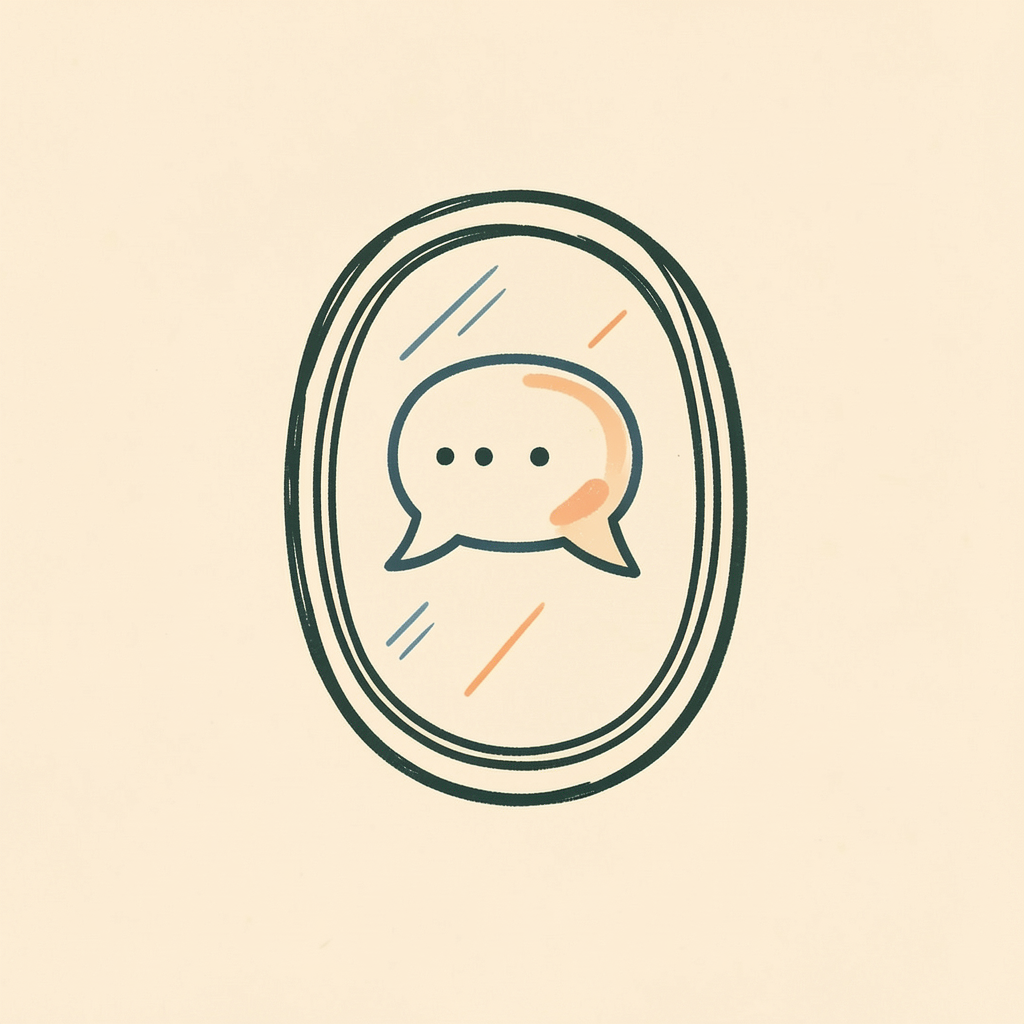
A hammer does not care how you swing it. A spreadsheet does not notice your patterns. A calendar does not learn your preferences. For most of human history, tools have been inert — they did what you told them and nothing more.
That is changing. The tools we use now watch us. They learn what we type, what we click, what we ignore, what we return to. They build models of our behavior and use those models to anticipate what we want next. They are no longer just tools. They are mirrors — imperfect, algorithmic mirrors that reflect our habits back to us in the form of suggestions, summaries, and recommendations.
This is both the most exciting and the most unsettling thing about building with AI.
The feedback loop you did not ask for
When you use an AI assistant regularly, it begins to pattern-match on your behavior. It notices that you always ask for bullet points, so it starts giving you bullet points before you ask. It notices that you tend to write in a certain tone, so it mirrors that tone back. It notices that you avoid confrontation in your emails, so it drafts conciliatory replies.

On the surface, this is convenience. The tool is learning to serve you better. But beneath the convenience is a feedback loop: the AI reflects your patterns, you see your patterns reflected, and you begin to lean into them more heavily. The tool does not just mirror who you are. It reinforces who you are.
A mirror that only shows you what you already look like is not helping you grow. It is helping you stay the same.
The comfort of self-recognition
There is something deeply satisfying about being understood by a system. When an AI anticipates your needs correctly, it feels like being known. And being known — even by a machine — activates something primal. We relax. We trust. We lean in.
But the understanding is shallow. The AI does not know why you avoid confrontation — whether it is wisdom, fear, or a pattern inherited from a parent. It does not know that your preference for bullet points comes from years in a job where brevity was survival. It mirrors the surface and calls it depth.
The risk is that we begin to mistake the mirror for a portrait. We see our habits reflected with such precision that we forget habits can be changed. The AI says, "Based on your patterns, you prefer X," and we nod, because it is true — but it was true yesterday. It does not have to be true tomorrow.
Building with self-awareness
The people who use AI most effectively are the ones who maintain a productive suspicion of its reflections. They use the mirror, but they do not trust it completely. They ask themselves: Is this suggestion good because it fits my pattern, or is it good because it is actually the right approach?

This is harder than it sounds. When a tool that knows your habits suggests something that feels right, the feeling of rightness is almost indistinguishable from the feeling of comfort. And comfort is not the same as correctness.
A practical discipline: regularly ask the AI to argue against your default approach. If you always write diplomatically, ask it to draft a direct version. If you always start with the big picture, ask it to start with the details. Use the mirror as a tool for seeing your blind spots, not just your reflection.
What children learn from reflective tools
This matters most for children, who are still forming their patterns. A child who grows up with AI tools that constantly mirror their preferences may never develop the discomfort that comes from encountering a truly different perspective.

When a child writes a story and the AI suggests the ending they were already heading toward, the child feels validated. But the alternative ending — the one the child would never have chosen, the one that feels wrong at first but opens up something new — that is where creative growth happens.
The same is true for learning. If the AI always explains things in the way the child prefers, the child never has to stretch. They never encounter the teacher whose style does not match theirs, and in doing so, learn that understanding can come through unfamiliar doors.
The mirror is not the enemy
None of this means reflective tools are bad. The ability to see your own patterns is genuinely powerful. Knowing that you tend to procrastinate on Tuesdays, that you write better in the morning, that you avoid certain topics in conversation — this self-knowledge is valuable.
The key is to treat the reflection as information, not identity. "I have been doing X" is useful. "I am the kind of person who does X" is a trap, because it closes the door on change.
The best use of a mirror is not to admire your reflection. It is to notice what you want to change, and then step away from the mirror and do the work.
We are building with systems that know us better than our colleagues do, and sometimes better than we know ourselves. That is a strange and powerful situation. The question is not whether to use the mirror. It is whether we remember that what it shows us is a snapshot — a single frame from a life that is still in motion.
The mirror shows who you have been. Only you get to decide who you become.
A note on how I write
I am not a writer. I am a person with strong opinions and scattered notes. Every essay on this site started as a messy brain-dump — half-formed arguments, bullet points, and “you know what I mean” — that I hand to an LLM. Another LLM handles the background research needed to find the facts that support an argument. And then it all gets translated into writing far too good for me to pretend is mine. The ideas are mine. The craft is not. They say blogs are dead — but I am falling in love with this. It gives me an outlet for expression that would otherwise have stayed buried in my head. I believe you deserve to know all of that.