There is a woman in Bengaluru — she moved there for work fifteen years ago — who calls her mother in Thanjavur every Sunday evening. The conversation is always in Tamil. Her children, born in Bengaluru, schooled in English, surrounded by Kannada, understand most of what their grandmother says. They reply in English. Their mother does not correct them. She tells herself it does not matter. But sometimes, after the call, she stands in the kitchen and says a word aloud — karunaiyodu, paasam, nandri — just to hear it in her own voice. She is not sure whether she is preserving something or mourning it.
On Republic Day, she stands for the anthem. She means it. She is proud of the passport, the constitution, the idea that a Tamil woman can build a career anywhere in this country and be protected by law. And she also knows — in a place deeper than law — that if her children cannot one day read Sangam poetry in the original, something irreplaceable will have slipped through her fingers. Not because India failed her. Because the architecture of modern life made Tamil optional, and she let it happen one school admission at a time.
Is that a contradiction? Or is that simply what it feels like to belong to two things at once in a country that keeps asking you to pick one?
I was born in Tamil Nadu to a Telugu-speaking family shaped by generations of Tamil influence, grew up in North India, returned to Chennai for engineering, and left for the United States at twenty-one. For twenty-three years, I have lived outside India while carrying India in habits, Tamil in memory, English in daily life, and America in circumstance. That is not two maps. That is four. The question "which one first?" becomes almost absurd when your own biography refuses to fit the binary. So when someone asks Tamil first or India first, I do not hear a slogan. I hear the sound of a life split across maps.
"Tamil first" and "India first" are not just slogans. They are emotional maps. They tell us where people locate dignity, memory, fear, duty, and hope.
The weight of a language
To say Tamil first is often to say: before I am counted, I must be recognized. It is the instinct of a language that has survived empires, religions, borders, scripts of power, and the flattening force of modernity. Tamil is not merely a tongue; it is a civilizational archive. Sangam poetry, devotional traditions, cinema, rationalist politics, caste struggles, diaspora longing, street humor, kitchen vocabulary, lullabies. For many, Tamil identity is not regional decoration inside India. It is a primary inheritance.
But what does "first" mean here? Does it mean cultural priority? Political autonomy? Linguistic protection? Emotional loyalty? Does it resist domination, or does it risk becoming its own form of exclusion?
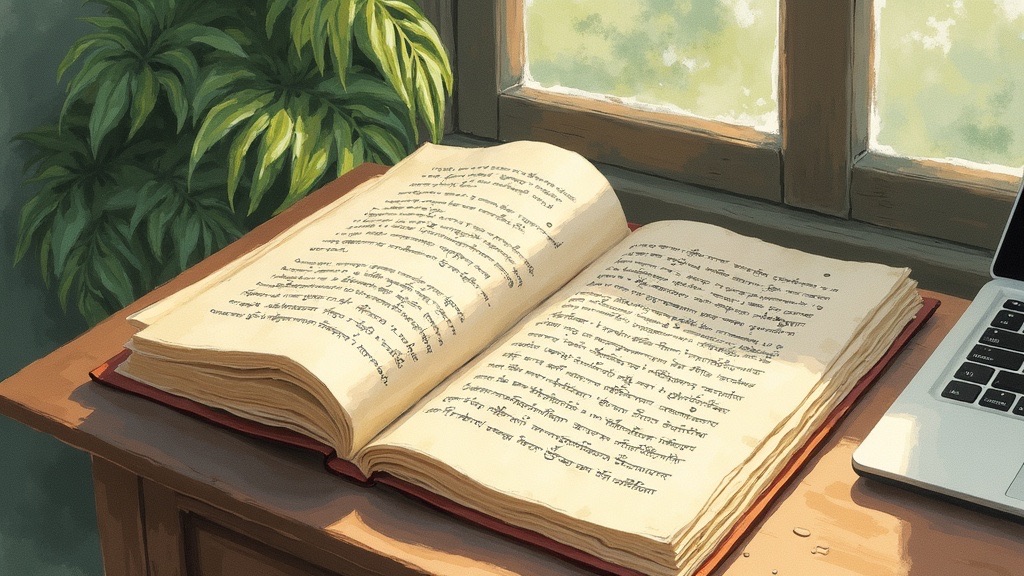
Tamil-first thought often rises from anxiety: Will Hindi become the default language of ambition? Will Delhi understand Chennai, Madurai, Coimbatore, Jaffna, Singapore Tamil homes, Malaysian Tamil labor histories? Can a deeply plural country accidentally become culturally centralized? If children stop thinking in Tamil, what exactly is lost: words, worldview, or a whole way of being human?
Yet "Tamil first" must also ask uncomfortable questions of itself. Who gets to define Tamilness? When a Dalit Tamil poet writes about caste violence in Tamil, is that celebrated as Tamil pride — or is it quietly sidelined because it embarrasses the pride narrative? When a Muslim trader in Madurai speaks Tamil at home, prays in Arabic, and sends his children to an English-medium school, is he Tamil enough? When a North Indian migrant's child grows up in Chennai speaking better Tamil than some Mylapore kids, does the pride tent expand to hold her — or does someone check her surname first?
Tamil pride has been a magnificent force of resistance — against Hindi imposition, against cultural erasure, against the assumption that modernity must speak someone else's language. But resistance movements sometimes calcify into their own orthodoxies. If Tamil identity becomes a gate with bouncers — where caste, religion, accent, or birthplace determines who gets in — then it has betrayed the very pluralism it claims to defend. Can language pride remain generous? That is not a rhetorical question. It is a test that every generation must pass again.
The larger home
Then comes India first: a different emotional architecture. It says the larger home matters. A vast, messy, argumentative republic needs some binding idea beyond state, language, caste, and region. India-first thinking sees unity not as erasure, but as survival. It asks: what protects Tamil Nadu in a dangerous world? What makes economic scale possible? What gives citizens rights beyond local majorities? What allows a Tamil person to work in Bengaluru, Mumbai, Delhi, Dubai, or beyond while carrying an Indian passport and constitutional promise?
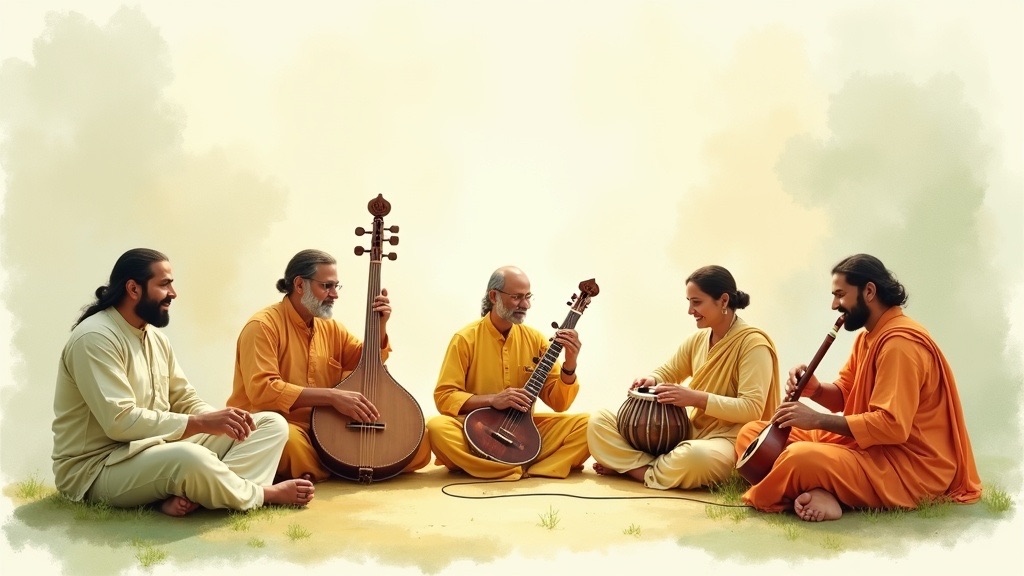
India-first is not always about homogenization. At its best, it is civic: a belief that India is strongest when Tamil, Bengali, Punjabi, Kashmiri, Marathi, Assamese, Malayalam, Telugu, Kannada, Odia, and countless other identities breathe freely within one constitutional sky. Like a raga ensemble, the beauty is not in every instrument sounding the same, but in their disciplined coexistence.
But India-first has its own uncomfortable mirror. When NEET is offered in English and Hindi but a Tamil-medium student must compete in a language she never learned to think in — is that unity, or is it a quiet sorting mechanism dressed as fairness? When a central government portal has no Tamil option, when a Hindi belt MP tells a Tamil speaker to "speak the national language" in Parliament, when railway signs that once read in the local script are replaced with Hindi — who exactly is being unified, and who is being flattened?
India-first works only when the "first" means constitutional commitment, not cultural hierarchy. The moment it becomes a demand that Tamil, Bengali, or Kannada shrink to make room for one language's ambition, it stops being patriotism and becomes the very imperialism it claims to oppose. If India is a union — and the word union matters — then how much consent must the union constantly renew from its members?
The real tension
The real tension may not be Tamil versus India. It may be center versus margin, memory versus scale, language versus administration, emotion versus governance. A person may be Tamil in dreams, Indian in law, Dravidian in politics, global in profession, local in food, and human in grief. Why must identity be a queue where only one can stand first?
Still, politics forces ranking. School language policy forces ranking. Job exams force ranking. Tax distribution forces ranking. River water disputes force ranking. Cinema, media, maps, textbooks, and national ceremonies quietly force ranking. So the question returns: first in what context?
At home, Tamil may be first. In constitutional duty, India may be first. In moral crisis, humanity may be first. In an election, livelihood may be first. In a poem, memory may be first. In a war, nation may be first. In a child's education, opportunity may be first.
Two warnings
Perhaps both ideologies are warnings. Tamil-first warns India: do not mistake size for soul. India-first warns Tamil pride: do not mistake rootedness for isolation.
One asks, "Will my language survive?"
The other asks, "Will my country hold?"
One fears erasure.
The other fears fragmentation.
And between them stands the ordinary citizen, carrying many names without wanting to amputate any of them.
So when someone says "Tamil first" or "India first," maybe the sharper question is not which flag must be lowered, but what wound, hope, or fear made them raise that flag first.
The woman in Bengaluru will teach her children Tamil — imperfectly, stubbornly, one lullaby and one phone call at a time. She will also teach them that the constitution is theirs.
But when a country asks for loyalty and a language asks for memory, what exactly are we being asked to put first?
— MillionRoots
A note on how I write
I am not a writer. I am a person with strong opinions and scattered notes. Every essay on this site started as a messy brain-dump — half-formed arguments, bullet points, and “you know what I mean” — that I hand to an LLM. Another LLM handles the background research needed to find the facts that support an argument. And then it all gets translated into writing far too good for me to pretend is mine. The ideas are mine. The craft is not. They say blogs are dead — but I am falling in love with this. It gives me an outlet for expression that would otherwise have stayed buried in my head. I believe you deserve to know all of that.