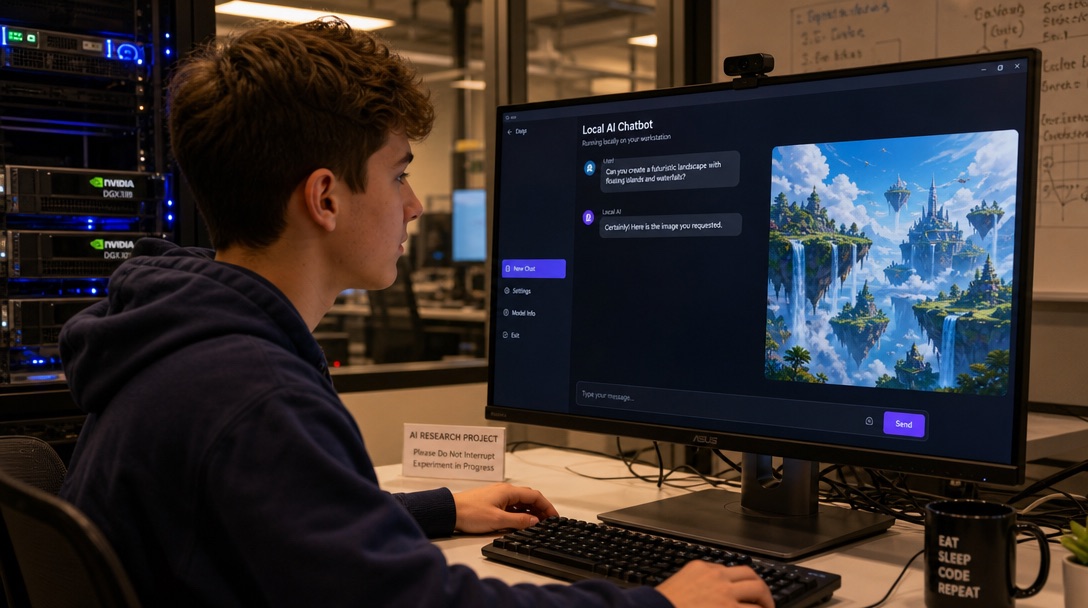
Your child is already using AI. They are asking ChatGPT to help with homework. They are generating memes with image tools. They are watching AI-generated content on every platform they touch. The question is not whether AI is part of their lives. It is whether they understand what they are using — or whether they are being used by it.
There is a difference between a tourist and a native. A tourist visits a place, takes photos, and leaves. A native understands the terrain, speaks the language, and knows how to build there. Right now, most students — even the tech-savvy ones — are AI tourists. They use the surface. They do not understand what is underneath.
AI literacy is not a nice-to-have for the next generation. It is the new baseline — as fundamental as reading, writing, and arithmetic.
That is why I run AI workshops for students. And that is why, starting this year, I am building something that goes beyond a single workshop: an ongoing AI club that keeps students engaged, exposed, and evolving as the technology itself evolves.
The gap is bigger than you think
Schools are not covering this. Not well. Not fast enough. And I say that without blame — the technology is moving so fast that by the time a curriculum committee approves a lesson plan on AI, the tools in that lesson plan are already two generations old.
But the result is a generation of students who are surrounded by the most powerful technology in human history and have no structured way to learn what it is, how it works, when to trust it, and how to harness it.
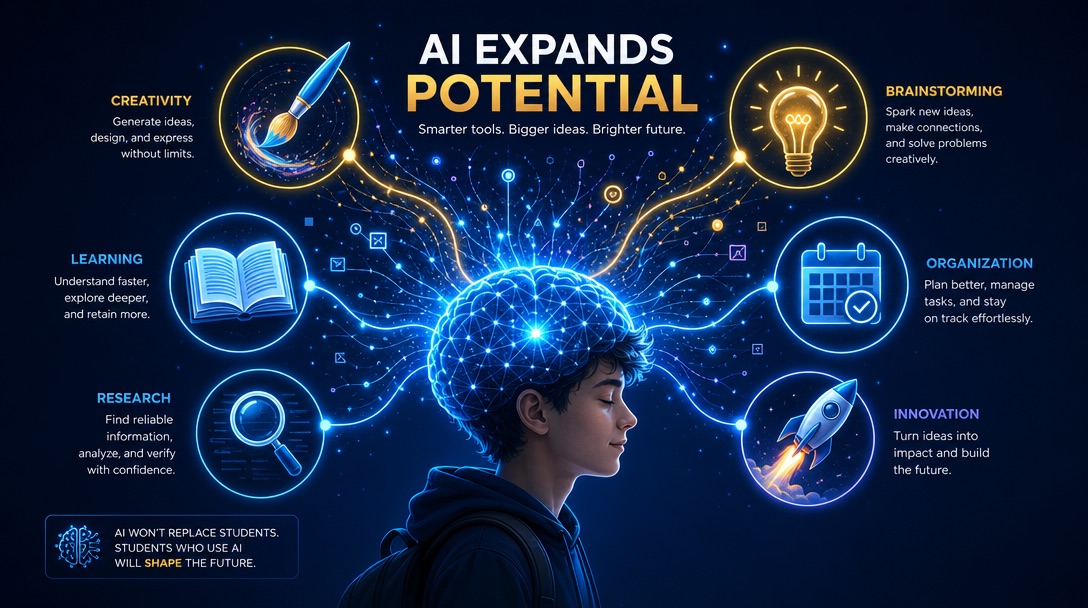
This is not about coding. This is about something much broader. Students need to learn how to integrate AI across every dimension of their thinking:
Learning
Using AI as a personalized tutor that adapts to how you think — not as a shortcut, but as an accelerant.
Creativity
Generating art, music, stories, and designs with AI — understanding prompts, styles, and the creative process behind the output.
Organization
Using AI to manage projects, prioritize tasks, summarize information, and build systems that keep complex work on track.
Brainstorming
Treating AI as a thinking partner that expands ideas, challenges assumptions, and surfaces angles you would not find alone.
Research
Going beyond search engines — using AI to synthesize, compare, fact-check, and build understanding from multiple sources.
Critical Thinking
Knowing when AI is wrong. Spotting bias. Understanding hallucinations. Developing the judgment to trust — and verify.
This is the full spectrum. And no school is teaching it comprehensively. The students who get this exposure now — through workshops, clubs, and hands-on projects — will have a compounding advantage that grows every year.
AI tourists versus AI natives
The distinction matters. Most students today are using AI the way a tourist uses a foreign city — they know a few popular spots, they follow the crowd, and they leave without understanding how anything works. What we need to build are AI natives — students who understand the infrastructure, speak the language, and can build with the tools.
The workshop is where this transformation starts. The ongoing AI club is where it compounds.
The workshop: 8 weeks that change how they see technology
Our AI workshop is not another screen-time course. Students work on real hardware — a private AI lab running dual NVIDIA RTX 3090 GPUs with 48 GB of VRAM. They interact with the same open-source tools that power AI startups and enterprise labs: Ollama for running local language models, ComfyUI for image generation, Open WebUI for chat interfaces, and Docker for containerized workloads.
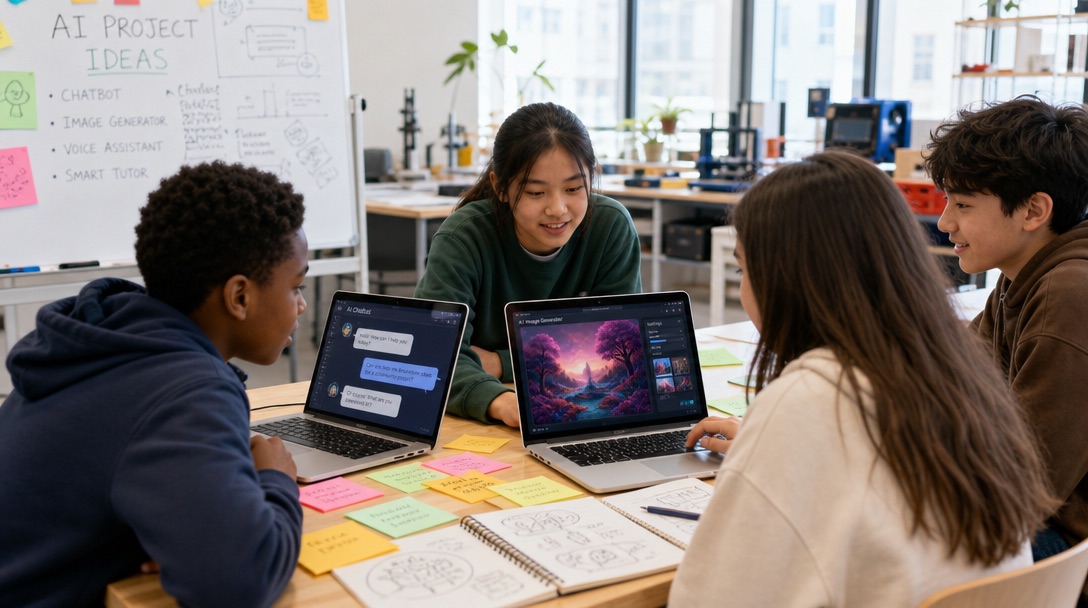
Every session follows the same rhythm: Explore the concept through demos and discussion. Build with real tools on real hardware. Create a personal project. Present and get feedback from peers. No slides-only lectures. No toy simulators. No memorizing terminology.
What Is AI, Really?
The difference between AI, machine learning, and rules. Play "Human vs AI" guessing games. Test chatbots with tricky questions.
The Art of Prompting
How the way you ask changes what you get. System prompts, few-shot examples, and context. Prompt engineering challenges.
AI on YOUR Computer
Running AI locally vs the cloud. Why privacy matters. Install and run a local chatbot. Compare to cloud-based tools.
Making AI Art
How image generation works. Prompts, negative prompts, and styles. Generate themed art series and refine results.
AI Art Studio
Style transfer, LoRA adapters. Apply art styles, create a portfolio, design a poster or book cover.
Build Your Own Chatbot
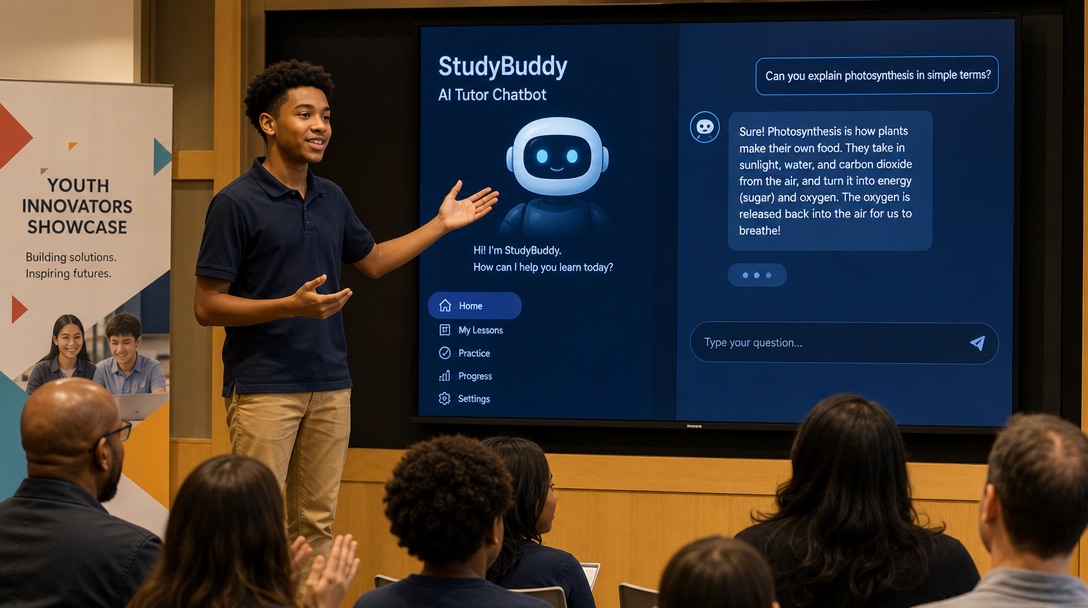
System prompts and personas. Giving AI a personality and context window. Design a themed chatbot: homework helper, game character, or story narrator.
AI Ethics & Critical Thinking
Bias, hallucinations, deepfakes, and responsible use. "Fact Check the AI" challenge. Debate: should AI be used in school?
Showcase Day
Present final projects to parents and peers. Reflect on the journey. Certificates, voting, and a discussion on where AI is heading.
Students walk away with tangible projects: a custom-themed chatbot, an AI art portfolio, and — most importantly — the confidence and vocabulary to explore AI on their own.
Why the workshop is not enough: the case for an AI club
Here is what I have learned from running workshops: eight weeks is enough to spark the fire. It is not enough to sustain it.
AI is moving faster than any technology in history. The tools students learn in a workshop today will have new versions, new capabilities, and new competitors within months. A one-time workshop, no matter how good, produces a snapshot of understanding in a field that changes weekly.
That is why I am building an ongoing AI club alongside the workshop. Think of the workshop as the boot camp and the club as the gym membership. One gets you started. The other keeps you growing.
The AI Club: Continuous exposure, continuous growth
A monthly gathering where students who have completed the workshop — and new members who are curious — come together to explore the latest developments in AI. Here is what it looks like:
- Monthly meetups with hands-on projects tied to the latest AI breakthroughs
- Tool of the month — each session introduces a new AI tool, model, or capability that launched since the last meeting
- Project showcases where members present what they have been building on their own
- Guest speakers — professionals using AI in different industries share how it works in the real world
- Ethical debates on current AI news — deepfakes, AI in schools, copyright, job displacement
- Peer mentorship — experienced members help newer ones, building leadership skills alongside technical ones
- Annual hackathon where club members form teams to build an AI-powered project in a day
The club ensures that AI fluency is not a moment. It is a practice. Students stay current, stay connected, and keep building — month after month, year after year.
A workshop plants the seed. The club is the garden where it grows.
Why this is the need of the hour
I am not being hyperbolic. This is urgent. Here is why:
The job market is restructuring around AI fluency. Every major employer — in tech, healthcare, finance, law, education, and creative industries — is integrating AI into their workflows. Students who enter the workforce without AI literacy will be at the same disadvantage as someone who entered the workforce in 2005 without knowing how to use email.
College applications are changing. Universities are increasingly looking for students who demonstrate AI proficiency — not just as users, but as builders and critical thinkers. A student who can describe building a custom chatbot or generating an AI art portfolio stands out in a way that another AP test score cannot match.
The AI divide is forming now. There is a rapidly growing gap between students who have structured access to AI education and those who do not. This gap will compound. Students who build AI fluency between ages 11 and 17 will have a decade-long head start over those who wait for college to catch up.
Critical thinking about AI is not optional. Deepfakes, hallucinations, algorithmic bias, and AI-generated misinformation are already shaping the information landscape your child navigates every day. Understanding how these systems work is not an academic exercise. It is self-defense.
What parents need to hear
I talk to parents every week who tell me their child spends too much time on screens. I understand the concern. But the solution is not less technology. It is better technology use. There is a world of difference between a student passively consuming AI-generated content and a student actively building an AI chatbot that answers questions about their favorite book.
One is consumption. The other is creation. Our workshop and club are designed entirely around creation.
Here is what your child gains from structured AI education that they will not get from YouTube tutorials or playing with ChatGPT on their own:
- Understanding, not just usage. They learn how AI works — not just how to type a prompt. This understanding is the difference between being controlled by the tool and controlling it.
- Ethics and critical judgment. They learn to spot bias, verify outputs, identify hallucinations, and think critically about AI's role in society. This is the intellectual immune system they need.
- Portfolio and proof of skill. They finish with tangible projects — a chatbot, an art portfolio, presentations — that demonstrate capability to future colleges and employers.
- Peer community. They join a group of curious, motivated students who push each other forward. The ongoing club ensures this community persists and grows.
- Confidence with technology. They stop seeing AI as magic and start seeing it as a tool they can direct, customize, and build with. That confidence transfers to every other domain they enter.
How communities can scale this
I can run one workshop at a time. But the demand for this kind of education is enormous. Here is how we can make AI education for students a community-wide effort:
1. Libraries as AI learning hubs
Public libraries already serve as community learning centers. Equipping a library with a modest AI workstation and partnering with local instructors to run monthly AI workshops for students would be transformative. The hardware cost is a fraction of what libraries already spend on programming.
2. School district partnerships
School districts can partner with workshop organizers to offer AI programs as enrichment — during summer, after school, or as elective modules. The key is partnering with practitioners who are building with AI, not just reading about it.
3. Corporate sponsorship for student AI labs
Local businesses benefit directly from a future workforce that is AI-literate. A sponsorship program that funds student AI lab hardware in exchange for mentorship access and talent pipeline visibility is a win for everyone.
4. Train-the-trainer programs
We need more people who can teach AI to young students. A structured train-the-trainer model — where experienced workshop instructors mentor new ones — is how we scale from one program to dozens in a metro area.
5. Regional AI clubs network
Individual AI clubs are good. A network of clubs that share resources, coordinate events, and run inter-club competitions is better. Imagine a citywide AI hackathon where student teams from different neighborhoods compete to build the most creative AI project.
I build AI systems during the week. I run a private AI lab with production-grade hardware. And every time I set up a new model, test a new tool, or solve a new problem, the same thought crosses my mind: students should be seeing this.
Not in a textbook. Not in a YouTube video. In their hands. On real hardware. With a community of peers who are just as curious as they are.
That is what the workshop gives them. That is what the club sustains. And that is why this is the most important investment we can make in the next generation — not because AI is trendy, but because the students who understand it will build the world that everyone else lives in.
Let us make sure that world is built by people who learned to think critically, create boldly, and use this technology for good.
For every student who deserves to be more than a passenger in the AI revolution.
Give them the controls. They are ready.
— VJ
A note on how I write
I am not a writer. I am a person with strong opinions and scattered notes. Every essay on this site started as a messy brain-dump — half-formed arguments, bullet points, and “you know what I mean” — that I hand to an LLM. Another LLM handles the background research needed to find the facts that support an argument. And then it all gets translated into writing far too good for me to pretend is mine. The ideas are mine. The craft is not. They say blogs are dead — but I am falling in love with this. It gives me an outlet for expression that would otherwise have stayed buried in my head. I believe you deserve to know all of that.