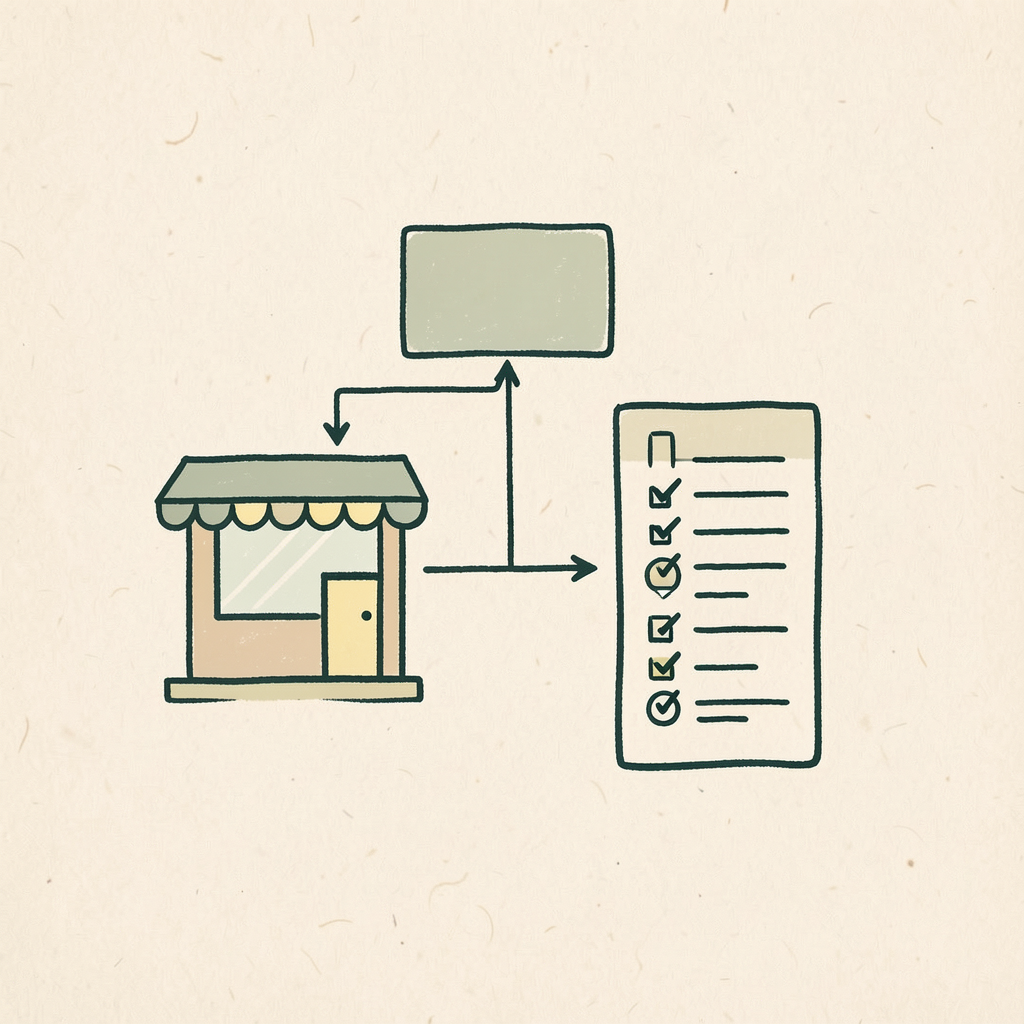
A friend of mine runs a bakery with four employees. She also has two kids in elementary school, volunteers at the school library on Thursdays, and somehow remembers everyone's birthday. When I asked her how she keeps it all running, she said, "I have a clipboard."
The clipboard has a daily checklist for the bakery, a weekly meal plan for home, and a rotating list of who is responsible for what. It is not sophisticated. It is not digital. But it works, because she built it around the way her life actually moves — not around the way a productivity guru thinks it should.
That clipboard is an operating system. And it is better than most enterprise software, because it was designed for a team of four, not a team of four thousand.
Why small teams resist systems
There is a common belief among small teams — families, shops, classrooms, nonprofits — that systems are for big organizations. Systems mean bureaucracy. Systems mean paperwork. Systems mean losing the human feel that makes small teams special.

This belief is understandable and mostly wrong.
What small teams resist is not systems. It is over-engineering. When someone suggests "let's get organized," they usually mean "let's adopt a tool that was designed for a company with a project manager." And that is where the resistance comes from — not from the desire for order, but from the mismatch between the tool and the team.
A good system for a small team feels like a habit, not a process. It runs on rhythm, not rules.
The three things every small team needs
After watching dozens of small teams — families managing complex schedules, neighborhood groups organizing events, five-person shops trying to stay sane — I have found that every successful system does three things. Only three.
First, it makes the invisible visible. In a small team, most of the work lives in someone's head. The grocery list is in Mom's head. The inventory count is in the owner's head. The upcoming deadlines are in the teacher's head. A system that simply writes these things down, in a place everyone can see, solves half the coordination problems overnight.
Second, it assigns ownership without assigning blame. The question is never "who messed up?" The question is "whose job is it this week?" Rotation works beautifully for small teams. Nobody owns the worst task forever. Responsibility moves. People learn each other's roles.
Third, it has a rhythm. Not a meeting — a rhythm. Every Sunday night you look at the week. Every morning at the shop, you check the board. Every Friday, the class reviews what they learned. Rhythm replaces willpower. You do not have to remember to check the system if the system is built into the cadence of your week.
The family as a team
Families are the original small teams, and they are chronically under-systemized. Not because parents are disorganized, but because no one teaches families to think of themselves as teams that need coordination.
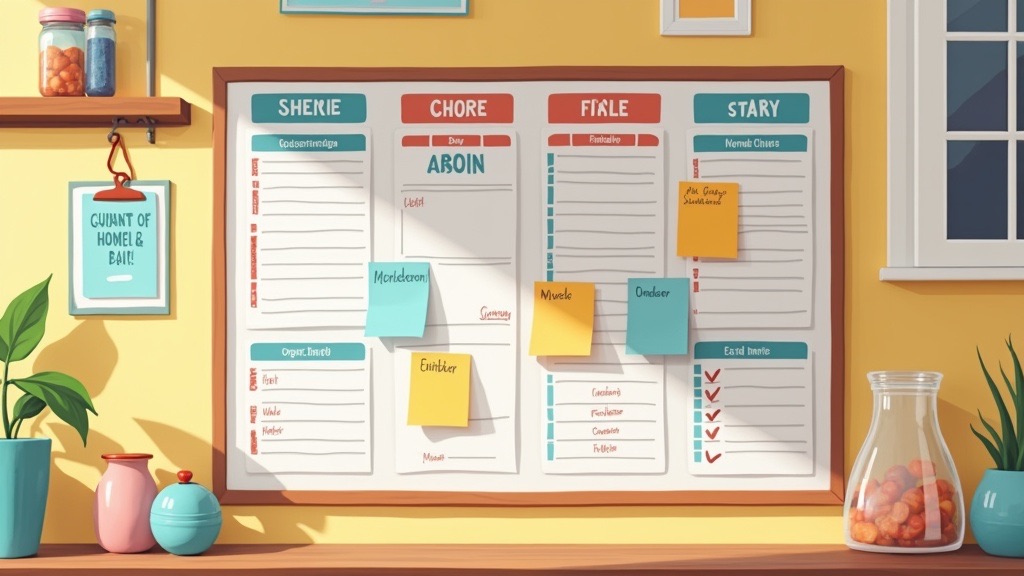
A family operating system does not need to be complex. A whiteboard on the fridge with three columns — This Week, Who's Doing It, Done — is transformative. Children as young as six can participate. They see their name next to a task, they do it, they move it to Done. The satisfaction is immediate and visible.
The magic is not in the whiteboard. The magic is that the family can see its own work. The labor of running a household — cooking, cleaning, driving, scheduling, remembering — becomes shared knowledge instead of one person's invisible burden.
AI as a systems assistant, not a systems replacement
Here is where technology can genuinely help, if used carefully. AI is excellent at the parts of systems that humans find tedious: generating checklists, drafting schedules, summarizing what happened last week, suggesting what to prioritize next.
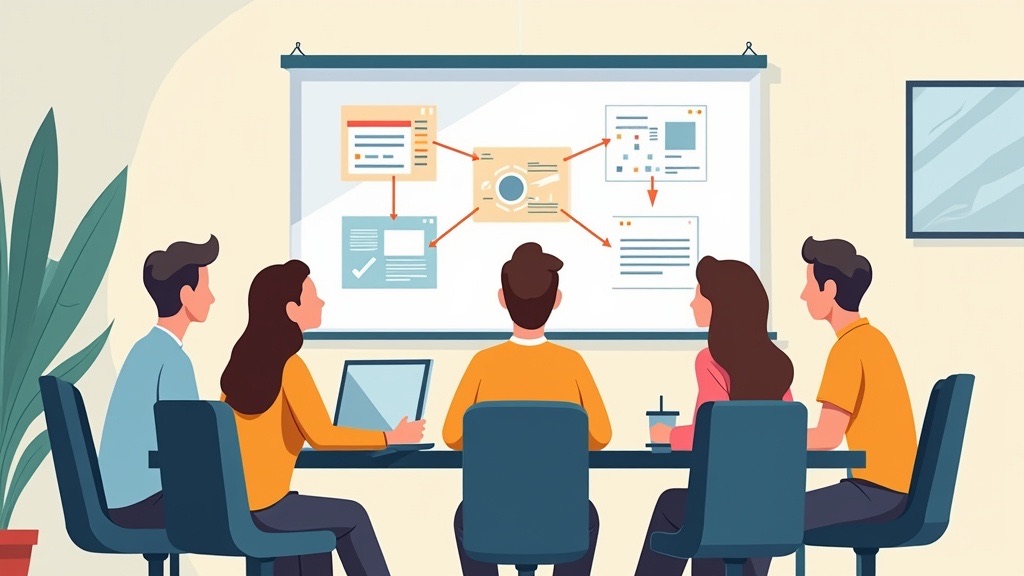
But AI should not own the system. The system should be owned by the people who use it. AI can draft the weekly meal plan, but the family should review it together. AI can suggest a task rotation for the shop, but the owner should adjust it based on who is strong at what. The tool serves the team, not the other way around.
The danger of AI-powered systems is the same danger as any system: it can become too perfect. A system that is too rigid does not flex when a child gets sick, when a supplier is late, when Thursday's volunteer cancels. Small teams need systems with give — systems that accommodate the mess of real life.
Start with what is already working
The best advice I can give to any small team thinking about systems is this: do not start from scratch. Start from what is already working.
Your family already has rhythms. There is already a person who remembers the appointments, a person who handles the money, a person who keeps track of what is running low in the pantry. A system does not replace these people. It makes their work visible and shareable.
Your shop already has habits. The opener already does certain things first. The closer already has a routine. Write those routines down. Put them on a wall. Now you have a system — one that grew from the actual behavior of your team, not from a template designed for someone else.
My friend with the bakery clipboard recently upgraded to a shared note on her phone. Same lists, same rhythm, just easier to update. Her employees can check it from home. Her kids can see the meal plan. The system grew, but it grew from the clipboard — from something real, something hers.
That is what an operating system for a small team looks like. Not a product. Not a framework. A habit, made visible, that the whole team can hold.
A note on how I write
I am not a writer. I am a person with strong opinions and scattered notes. Every essay on this site started as a messy brain-dump — half-formed arguments, bullet points, and “you know what I mean” — that I hand to an LLM. Another LLM handles the background research needed to find the facts that support an argument. And then it all gets translated into writing far too good for me to pretend is mine. The ideas are mine. The craft is not. They say blogs are dead — but I am falling in love with this. It gives me an outlet for expression that would otherwise have stayed buried in my head. I believe you deserve to know all of that.