
My son asked me why the sky is blue. Before I could open my mouth, he said, "Wait, I'll ask the AI." Thirty seconds later he had a perfect answer about Rayleigh scattering, wavelengths, and atmospheric composition. He nodded, satisfied, and moved on to his snack.
The answer was correct. The moment was complete. And something important was missing.
What was missing was the wondering. The part where you sit with a question and let it be a question for a while. The part where your parent says something half-right and you think about it in the bath. The part where you look up the next day and the sky is different — pinker, grayer — and you wonder if the answer still holds.
The speed of answers
We have never lived in a time when answers arrived this fast. A child with access to AI can resolve nearly any factual question in seconds. This is, by most measures, a miracle. A generation ago, the question would have required an encyclopedia, a library trip, or a parent who happened to know about atmospheric optics.
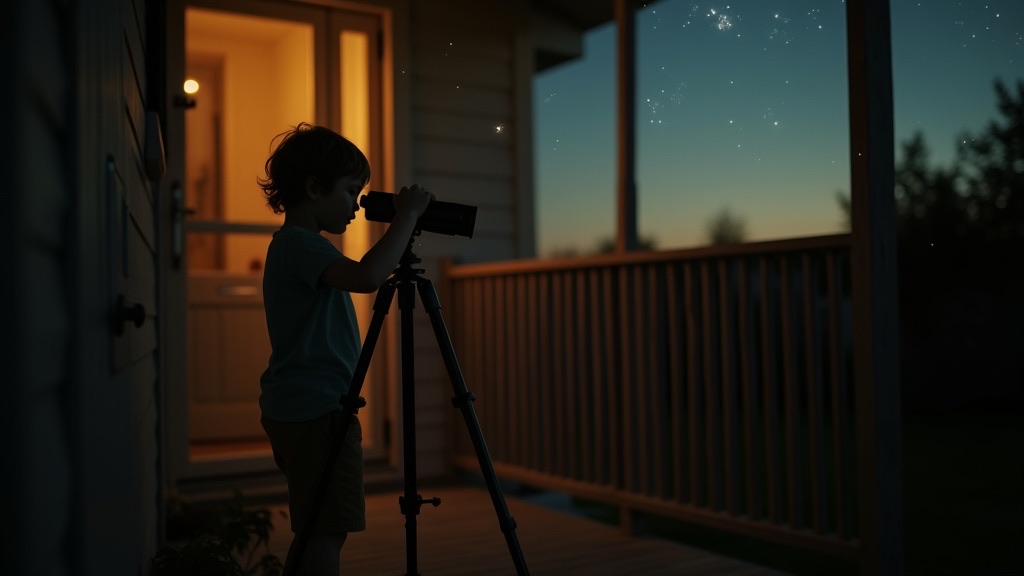
But speed changes the shape of learning. When answers are instant, questions become disposable. You ask, you receive, you move on. The question never has time to become interesting — to branch, to mutate, to lead somewhere unexpected.
A question that lives in a child's mind for a day is worth more than an answer that arrives in a second.
This is not an argument against AI. It is an argument for protecting the space between the question and the answer — the space where curiosity actually lives.
What curiosity looks like from the inside
When a child is genuinely curious, you can see it in their body. They lean forward. They squint. They turn things over in their hands. They ask the same question three different ways, not because they did not hear the answer, but because the question is changing shape as they think about it.
This is not inefficiency. This is learning happening in real time.
The cognitive science is clear on this: struggle is not the enemy of understanding — it is the mechanism. When a child has to work for an answer, the neural pathways formed are deeper and more durable than when the answer is handed over. The effort is not a tax on learning. It is the learning.
The role of not-knowing
Adults are often uncomfortable when children do not know things. We rush to fill the gap, to correct the misunderstanding, to provide the right framework. AI amplifies this instinct by making the correct answer always available.

But not-knowing is a productive state. When a child does not know why ice floats, they might guess. They might say, "Because it is tired of being at the bottom." This is wrong, and it is also wonderful, because it means the child is building a theory. They are doing science — badly, imaginatively, in the way that all science begins.
If we replace that fumbling with a clean paragraph from an AI, we get accuracy. But we lose the fumbling. And the fumbling is where the wonder lives.
Practical ways to protect the gap
This does not require banning AI or hiding devices. It requires a few small habits that preserve the space for wondering.
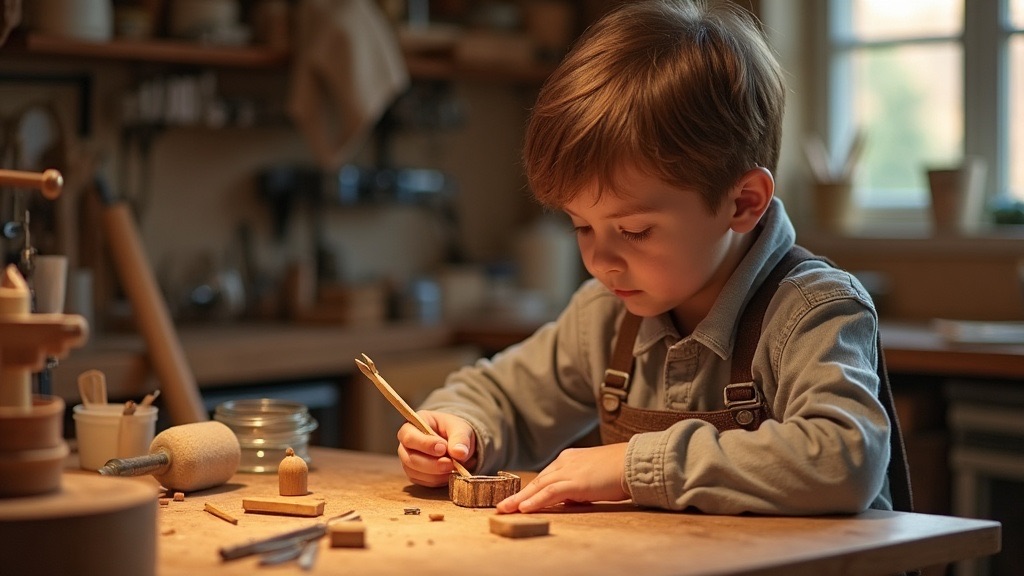
When your child asks a question, try waiting. Not forever — just long enough to say, "What do you think?" Let them guess. Let them be wrong. Let the wrongness spark a follow-up question that neither of you expected.
When you do use AI together, make it a second step, not a first one. "Let's think about it first, then let's see what the AI says." Now the AI is a conversation partner, not an oracle. The child compares their theory to the AI's answer and something richer happens — they evaluate, they push back, they notice where they were close.
Ask questions that AI cannot answer. Not trick questions, but genuinely open ones. "What do you think the saddest color is?" "If you could redesign lunch, what would change?" "Why do you think your friend was quiet today?" These are the questions that build the muscles curiosity needs — the tolerance for ambiguity, the willingness to sit with something unresolved.
Wonder is not a phase
We sometimes talk about wonder as if it belongs to early childhood — a charming phase that children grow out of, like believing in fairies. But wonder is a cognitive stance, not an age bracket. It is the willingness to be surprised, to find the world more complex than your current model of it.
The best scientists, artists, and builders never lose it. They protect it. They cultivate habits that keep them in contact with their own not-knowing.
Our job as parents is not to fill our children with answers. It is to help them fall in love with questions — so deeply that no technology, no matter how capable, can make them stop asking.
The sky is blue because of Rayleigh scattering. My son knows that now. But I hope that tomorrow, when the sunset turns the whole sky orange and violet, he pauses before reaching for the AI — and just looks up for a moment, wondering.
A note on how I write
I am not a writer. I am a person with strong opinions and scattered notes. Every essay on this site started as a messy brain-dump — half-formed arguments, bullet points, and “you know what I mean” — that I hand to an LLM. Another LLM handles the background research needed to find the facts that support an argument. And then it all gets translated into writing far too good for me to pretend is mine. The ideas are mine. The craft is not. They say blogs are dead — but I am falling in love with this. It gives me an outlet for expression that would otherwise have stayed buried in my head. I believe you deserve to know all of that.